
CONTENTS
Nylon vs Polyester: The Backpack Fabric Showdown
Check out our cabin bag collection
View All
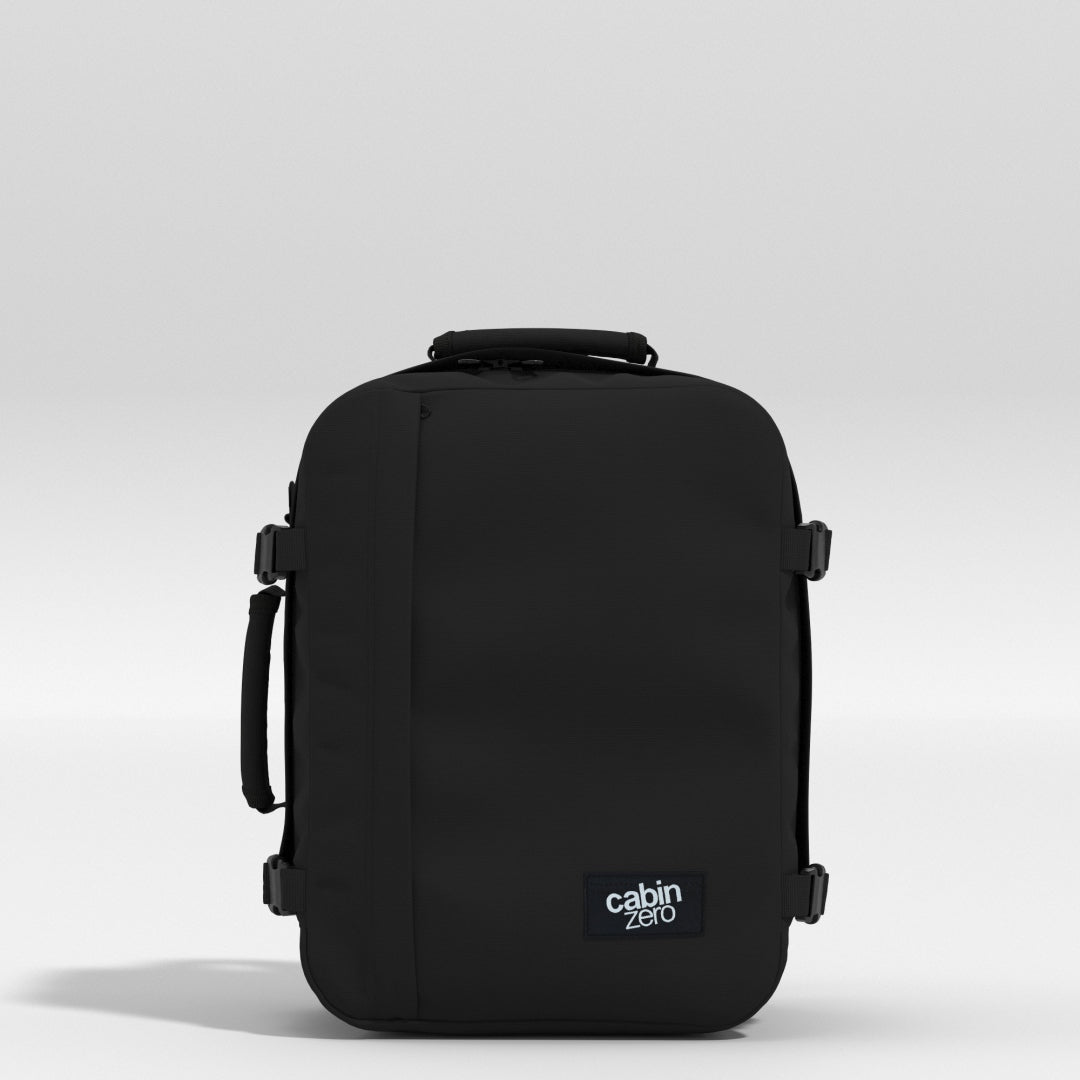


When you are buying a travel backpack, it is common to wonder about nylon vs polyester and which one is the better option. The truth is that there is no clear winner.
In this article, we are going to keep things straightforward. We examine the differences between nylon and polyester in terms of durability for weight, shape retention, airline carry-on sizes, and so on. Along the way, you will get earth advice to help you pick the right fabric based on how you move around and explore.
Key takeaways:
-
Both nylon and polyester work well for backpacks when the denier and fabric construction are chosen correctly.
-
Choose nylon if you need maximum durability, carry heavy loads, travel through rugged outdoor terrain, or frequently drag your bag across rough surfaces.
-
Choose polyester if you travel in hot or humid climates, want a bag that holds its shape and colour over time, or need a well-structured carry-on at a more affordable price.
|
Travel Style |
Best Fabric |
CabinZero Pick |
|
City trips and daily commuting |
|
|
|
Carry-on only and underseat fit |
|
|
|
Hiking, climbing, and camping |
|
|
|
Backpacking |
|

Let’s learn all you need to know about Nylon and polyester.
What Is Nylon?
Nylon is a synthetic material belonging to a family of materials called polyamides. Nylon was invented in the 1930s, when materials such as silk were difficult to obtain.
One of the most fascinating aspects of nylon is its properties when stretched.
-
The fibres are thinner and smoother
-
But they remain strong and elastic instead of snapping.
This is one of the key reasons nylon often comes out ahead in the nylon vs polyester discussion when strength and flexibility matter.
These days, nylon shows up in places where gear really gets put to work. Think trekking rucksacks, outdoor clothing, or military equipmen
People use nylon because it can take a beating, flex without tearing, and hold up well against constant rubbing and use.
However, nylon has one problem: heat. Nylon does not take kindly to high temperatures, which can cause it to shrink, lose its form, or even melt.
What Is Polyester?
Polyester is another man-made fibre that has been produced through a chemical process using materials derived from oil and coal. It was developed a bit later than nylon.
The most common type used in fabrics is polyethene terephthalate, usually called PET. That is why, when people talk about polyester fabrics, you will sometimes hear PET mentioned instead.
In real life, polyester is valued because it is easy to live with.
-
Handles sunlight well
-
Does not stain easily
-
Keeps its colour better over time
-
Very resilient to normal wear and tear
-
Dries quickly if it gets wet.
That combination makes polyester a solid choice for travel, where gear needs to be robust and does not require much maintenance.
Which One Is Better as Backpack Materials: A Side-By-Side Comparison

Which one will be the winner?
Nylon and polyester are both popular synthetic materials used in travel backpacks. They are both low maintenance to wash and clean, and resistant to creases, mould, and everyday stains.
Even so, they do not behave the same. There are some key differences in how they perform and how they age.
Below is a quick nylon vs polyester comparison to help you see how the two materials differ when used in backpacks.
|
Key Aspects |
Nylon Backpacks |
Polyester Backpacks |
|
Texture |
Smoother and a bit shinier |
Slightly rougher to the touch |
|
Durability |
Generally tougher, especially against abrasion and tearing |
Holds up well, but not as strongly as nylon in rough or sharp conditions |
|
Weight |
Lighter and more flexible for the same level of strength |
A little heavier, but better at keeping its shape |
|
Price |
Usually costs more due to a more complex production process |
More affordable thanks to large-scale production |
|
Water Resistance |
Tends to absorb more water unless treated with a coating |
Naturally sheds water better and dries faster |
|
Colour Retention |
Fades faster if not treated |
Keeps colours looking good for longer |
|
Longevity |
May stretch and fade over time with regular sun exposure |
Handles sunlight better and stays more stable |
|
Drawbacks |
Does not cope well with long-term UV exposure |
Less stretch and flexibility |
|
Use Case |
More suited to situations where durability is the main concern, such as trekking, climbing, camping, or more rugged journeys |
Better for lighter travel, carry-on only trips, daily commuting, or school and office use |
1. Strength to Weight Ratio

Nylon is often the primary fabric used in heavy-load trekking backpacks.
When comparing nylon vs polyester, nylon generally provides you with more strength per denier than polyester (We will discuss denier in the proper context in the next section).
In day-to-day use, this means a nylon backpack can be lighter whilst still resisting tears better than a polyester one.
It is particularly useful when keeping weight down matters, but you still want a bag you can rely on, such as for climbing or trekking with heavy loads.
2. Price and Value for Money
When we are deciding between nylon vs polyester for our backpack, price is something that most of us will inevitably think about.
The fact is that polyester backpacks are cheaper than nylon backpacks. This can be a huge advantage if you are purchasing a larger backpack or if you are buying multiple backpacks.
The main reason comes down to how the fabrics are made.
Polyester is simpler to produce and uses less energy overall, which helps keep costs down.
Nylon takes a more involved manufacturing process and needs more energy, which pushes the price up. On top of that, the raw materials used for nylon, such as caprolactam, tend to be more expensive and their prices can change more over the years.
3. Long-Term Durability

Polyester fabric generally repels water better than nylon.
In the nylon vs polyester debate around backpacks, both options are built to last. You should not expect either of them to fall apart after just a handful of trips.
The real difference shows up over time, in how the bag ages and how it deals with the places you take it.
-
Nylon has more give in it. It stretches and flexes, which helps it shrug off knocks and scrapes. Drag a nylon backpack over rocks or brush it against rough tree bark, and it will often still look pretty good, with fewer visible scuffs or small tears.
-
Polyester does not stretch as much, but that helps it hold its shape. Throughout the years, a polyester backpack is less likely to sag or lose its form, even with regular use.
Where polyester really comes into its own is in sunny or wet conditions.
In the nylon vs polyester backpack conversation, this is worth noting if you travel a lot in hot or tropical climates, because polyester tends to look fresher longer. Colours fade more slowly and stay clearer for longer.
Nylon can still work well if it is mostly used out of direct sun, or if the fabric is treated for UV protection or blended with polyester.
Polyester also sheds water more easily and dries faster. If you live somewhere rainy or often travel in snowy weather, it is easier to keep a polyester backpack dry and free from mould.
Nylon, on the other hand, absorbs more water and holds onto it longer, which can become a problem in humid environments.
4. Bag Weight and Underseat Fit

Both fabrics are comparable in weight for equivalent thicknesses.
When thinking about a nylon vs polyester backpack, weight and stiffness once packed matter just as much.
A backpack might fit the size limits when it is empty, but fill it up, and it can quickly become bulky. The space under a seat is awkward, with limited height and very little flexibility. That is why gate staff may still stop a backpack that looks too thick, even if it technically meets the size rules.
Both nylon and reinforced polyester are brilliant choices for underseat bags. They are light, tough, and handle constant rubbing against the cabin floor well.
From real-world use, though, nylon tends to be softer and more flexible, which means it can bulge if you overpack it. Polyester is a bit stiffer and holds its shape better, so you can keep the bag within cabin limits effortlessly.
To be on the safe side, it helps to choose a backpack that is designed from the outset to fit under the seat on most major airlines. Do that, and you will not need to worry too much about the fabric. You can just pack, board, and get on with the trip.
5. Suitability for Travel and Daily Use
There is no outright winner when comparing nylon vs polyester here. Nylon is not simply better than polyester, and polyester is not automatically better than nylon. The right choice depends on how you use your backpack and the kind of places you take it.
If your travel itinerary involves a lot of hiking, camping, and trudging through tough terrain, a nylon backpack would be more reassuring to carry. It is tougher, has more give in the fabric, and can withstand sharp rocks, uneven ground, and heavier loads better.
Polyester backpacks are still very suitable for travel, especially when your journeys are not too demanding. The slightly stiffer fabric makes them a solid option for everyday use. That structure helps protect books and laptops from the knocks of trains and buses. Polyester also holds its colour nicely, even after frequent exposure to the sun and the occasional rain-soaked walk.

Polyester is often used in bright-coloured backpacks because it retains its colour well in the long run.
Nylon vs Polyester Backpack: Which One Suits Your Travel Style?
Rather than worrying about which fabric sounds better on paper, it is worth thinking about how and where you actually travel. Match the material to your routine, and your backpack is far more likely to feel like a good choice trip after trip.
Before getting into the specifics, here is a brief rundown to help you match each material to the way you go out:
|
Travel Style |
Priority |
Recommended Fit |
Why |
|
Only Carry-on / Underseat |
Size control, structure |
Polyester |
Keeps its shape, easier to stay within cabin limits, and usually more affordable |
|
Urban adventures / Daily commutes (school, office) |
Comfort, low weight, water resistance |
Nylon with a water-resistant coating or polyester |
More comfortable to carry and better at keeping rain out |
|
Backpacking |
Balance between weight and durability |
Nylon, such as Cordura or ripstop |
Light, flexible, and tough enough for regular trips |
|
Long-term travel / Multi-city trips |
How the bag ages over time |
Nylon or high-denier polyester |
Less likely to show signs of wear and tear |
1. City Breaks and Daily Commuting
Regardless of whether you walk, bike, or use public transportation, a lighter backpack is a big plus. Your back and shoulders will thank you by the end of the day. The material should also be able to withstand sudden rain showers, protecting documents and electronics. Both nylon and polyester are suitable for this type of travel.
-
Nylon: A bag with a water-resistant coating is a safe bet. It feels pleasant to carry and deals well with the bumps and scrapes of crowded streets and public transport.
-
Polyester: It tends to keep its colour for longer. Your bag will look fresher even after being exposed to lots of sunlight. And if your bag gets caught in a downpour, it usually dries without much fuss.
2. Travelling With Carry-on Only
If you are travelling with just one carry-on bag, keeping it light comes first. The bag also needs to keep its shape, which helps you stay within size limits both at home and at the airport and avoid being asked to check it in.
For this kind of trip, polyester, ideally around 600D to 1000D, often makes sense in the nylon vs polyester backpack debate.

Polyester backpacks balance abrasion resistance with good shape retention when stored under an aircraft seat.
3. Backpacking Trips
In this type of adventure, you are seldom in one place. You trek between towns, through the woods, and continue to haul your backpack on and off buses, trains, and ships.
Looking at nylon vs polyester backpacks through this travel style, reliability and low weight matter most, along with decent rain protection.
Nylon is often the go-to choice here. It is strong, a little flexible, and generally lighter, which makes long days on your feet much more relaxed.
Versions like Cordura or ripstop nylon are favourites among backpackers because they handle knocks and scrapes better.
Many brands also add a DWR coating, sometimes on recycled nylon, to help keep your gear dry when the weather is not on your side.
However, do note that neither fabric is fully waterproof, so it’s best to invest in a rain cover.
4. Long-Term or Multi-City Travel
In cases of longer trips, your bag really earns its keep. It goes through changing climates, busy airports, long train journeys, and plenty of crowded streets. In the nylon vs polyester backpack choice, the smartest option is a fabric that can take constant use and the occasional rough moment without giving up. If it has some built-in rain protection, that’s a perk. The good news is that both polyester and nylon can fit the bill here.
-
High denier polyester (usually 600D and above): It holds its shape and colour without fading too quickly. It is still durable enough for long trips and tends to excel in hot and humid places like Southeast Asia.
-
High-denier Cordura nylon (around 1000D to 1680D): This kind of fabric is known for being seriously tough. It stands up well to tears and scuffs, allowing you to pack more weight, such as gadgets or photography equipment, without much worry.

Rough journeys often call for the toughness of 1000D polyester backpacks.
What Does Denier Mean in Nylon vs Polyester Fabrics?
Denier measures how much a yarn weighs over 9,000 metres. So a 10D yarn weighs half as much as a 20D yarn. Seeing 600D on a bag just tells you the fabric uses yarn weighing 600 grams over that length.
In everyday terms, the higher the denier, the thicker, heavier, and more rugged the fabric will be. A lower denier feels lighter and more flexible. Most nylon backpacks sit somewhere between 210D and 1000D or more. For polyester backpacks, 600D is very common.
600D nylon vs 600D polyester
Generally speaking, nylon is more resistant to scuffs and abrasions. At the same denier, 600D nylon is definitely more durable than 600D polyester because it stretches slightly under pressure rather than ripping apart immediately.
Polyester, though, has its own strengths. It handles sunlight better and naturally shrugs off water more easily.
1000d nylon and 600d polyester
When it comes to 600d polyester vs 1000d nylon, it really depends on how hard you plan to use your bag.
-
1000D nylon is made to take a beating and is commonly found on military or heavy-duty travel packs.
-
600D polyester, on the other hand, is lighter on the shoulders and kinder on the wallet. It also performs well in both rain and sun, making it a popular choice for everyday bags.
One thing to keep in mind is that denier is not the whole story. A higher number does not necessarily mean a better backpack. A few other details play a part, too.
-
Yarn density: This refers to how tightly the yarns are packed together. A looser weave saves weight but is usually less strong.
-
Weave type: Ripstop fabrics, for example, have woven-in threads to prevent tears from spreading. This is more durable but also a bit heavier.
-
Coatings: Some coatings are applied with heat and can weaken the fabric slightly over time. Other coatings, such as silicone, are absorbed by the yarns and can actually make the fabric more flexible and durable.
Once you take all of this into account, denier becomes a helpful guide rather than a confusing number, and selecting the right nylon vs polyester backpack gets a lot simpler.
How We Think About Materials at CabinZero

Our bags at CabinZero start with how people actually move through the world, not just with material specifications.
Across our range, you will see both nylon and polyester in our lightweight, no-nonsense travel bags. That said, to us, materials are there to serve the journey, not to steal the spotlight.
Every bag starts with a basic question: how do people really travel, and what do they need once they get there? Nylon and polyester are just part of the toolkit we use, alongside YKK zippers and OKOBAN tracking tags, to make travel more comfortable and far less stressful.
That's why we use each material where it's most effective, based on the type of experience we want to create with each bag collection:
|
Collection |
Experience |
Main material |
Best for |
|
A good balance of light weight and room for everyday travel |
600D polyester |
School, work, city chores and short vacations |
|
|
Built tough to handle knocks and rough use |
1000D nylon |
All kinds of adventures, from hiking and camping to beach and cave explorations |
|
|
Strong and spacious |
500D nylon ripstop |
From trails and gyms to the office or a quick city getaway |
Our bags are designed to seamlessly integrate into your daily life. Whether it’s off to class, to work, or out for the weekend, or embarking on a longer-term adventure, we hope your bag is the easy part of the journey. CabinZero backpacks meet the cabin limits of most major airlines, helping you avoid extra baggage fees and enjoy the kind of freedom that wheeled luggage rarely offers.
FAQ
1. Which Is Better, Nylon Or Polyester?
It really depends on what you value most. Nylon is tougher and more flexible, so it resists knocks, rubbing, and being bent repeatedly. Polyester is also durable, just a bit less stretchy. Where polyester shines is in warm and/or wet environments. It handles UV rays and moisture better and dries quickly, which makes it a reliable choice for everyday travel.
2. Is Nylon Better for Skin Than Polyester?
Yes, it probably is. Nylon usually feels softer and smoother, so it is less likely to irritate, especially if you have sensitive skin. It does soak up more moisture and takes longer to dry, but that is actually a benefit when it is hot and you are sweating.
3. Is 100% Polyester Good for Backpacking?
Yes. Polyester is strong, resists scuffs and dries fast, which is handy when you are on the move. Its natural water resistance helps in wet weather, and it keeps weight down. On the flip side, it can trap smells, does not breathe as well as natural fibres, and can melt if it gets too close to sparks. Like all travel products, it’s best used when you understand its strengths and weaknesses.
Only The One That Works For You
Ultimately, the nylon vs polyester question does not have a single right answer. Both materials have their place in backpack design, and what really matters is the kind of trip you are planning and what you value most during the journey.
It all depends on what works best for your type of travel. Nylon is commonly used for its durability and flexibility, whilst polyester is preferred for its water-resistance and ability to maintain its colour.
If you’re interested in seeing how these materials perform in real-world conditions, take a look at CabinZero backpacks, which are based on how people actually travel.
Quyen Pham


Leave a comment